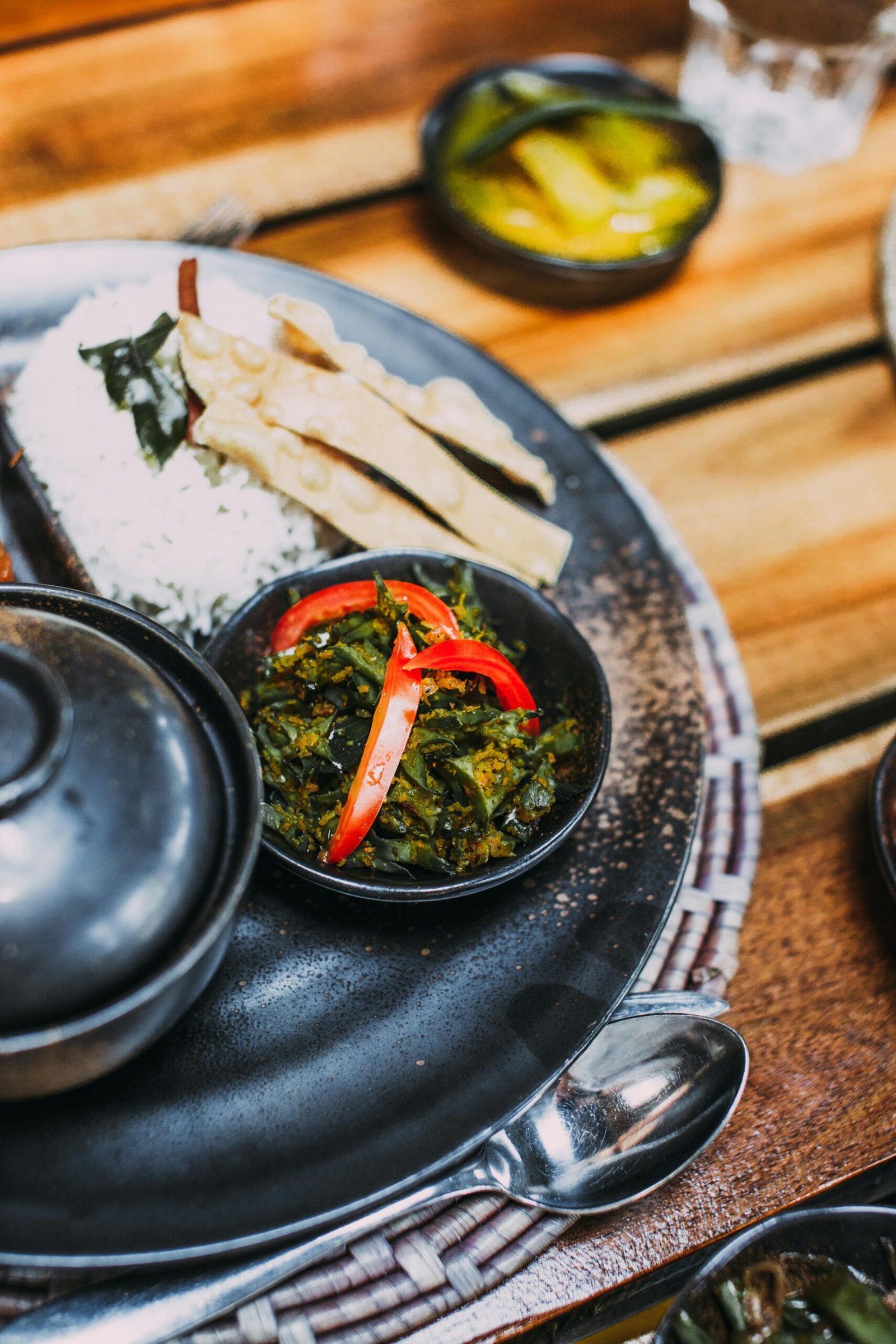
If you think a standard breakfast involves a soggy bowl of cereal or a piece of burnt toast while rushing to a Zoom call, then you have clearly never woken up in the Northeast of India. In the land of the mighty Brahmaputra, breakfast is not just a meal but a slow and deliberate celebration of heritage. When you sit down to explore Assamese breakfast dishes, you are essentially being invited into a world where rice is king, cream is a legitimate food group, and speed is considered a bit of a culinary insult. It is a sensory experience that balances the crunch of parched rice with the velvet texture of fresh curd, all washed down with tea that actually tastes like it was grown on a hillside rather than in a dusty factory. This morning ritual is known as Jolpan, and it is a cornerstone of the identity of the people living in the lush green plains of the Brahmaputra valley.
The Heart of the Morning with Assamese Breakfast Dishes
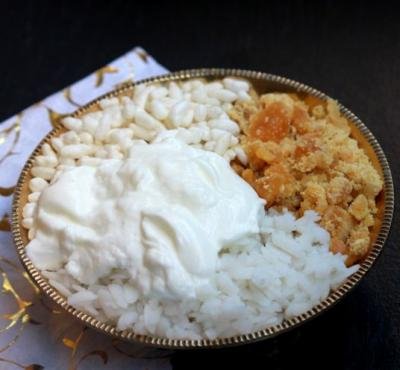
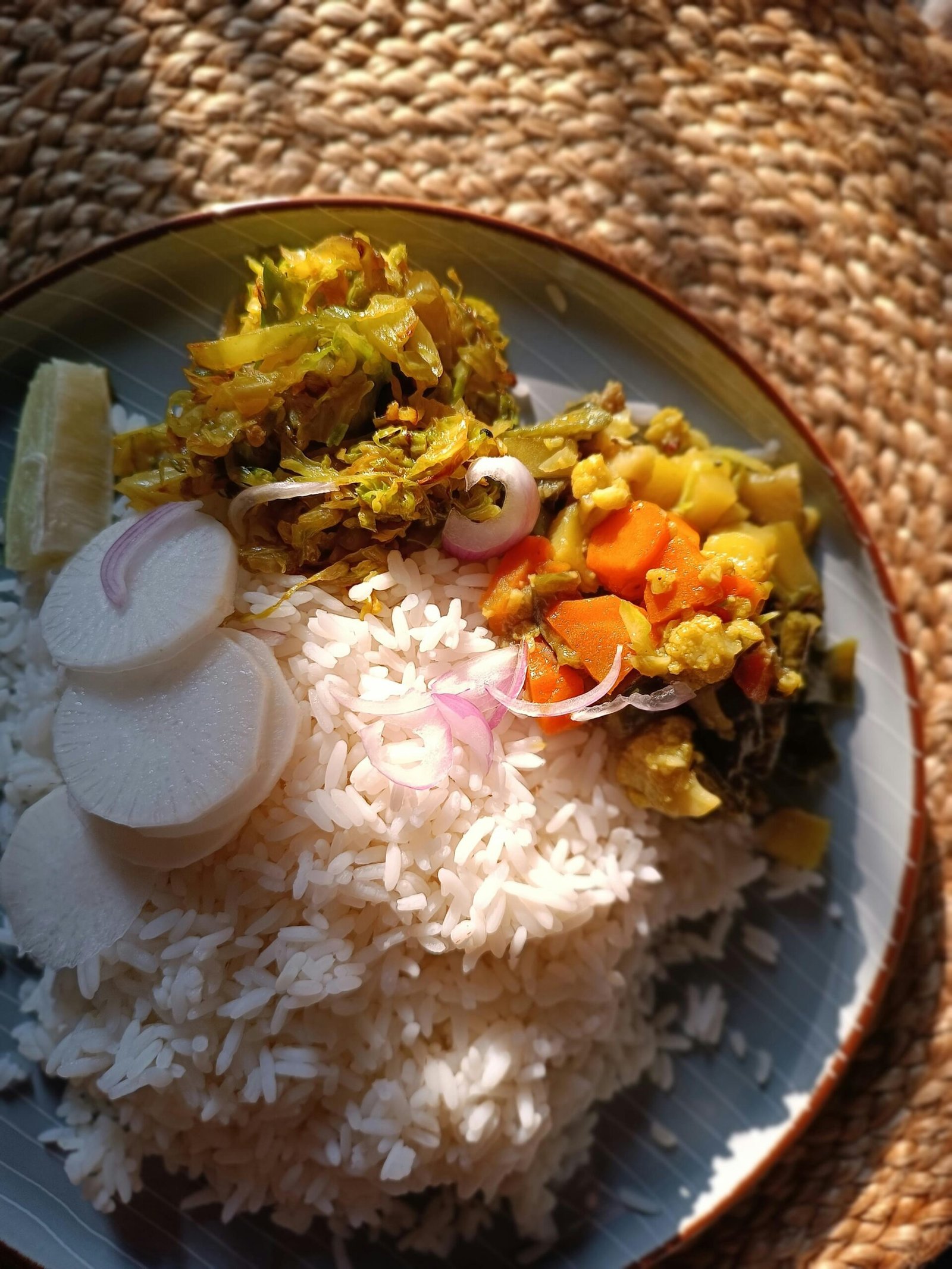
To understand the morning meal here, you first have to understand the concept of Jolpan. While the word technically translates to a snack or a light refreshment, do not let that fool you into thinking it is a minor affair. In the context of traditional Assamese food, Jolpan is a substantial feast that usually requires no actual cooking over a fire. This makes it perhaps the most ancient form of “no-cook” meal prep ever invented. The star of the show is almost always rice, but not as you know it. There are dozens of varieties of rice in this region, each with its own personality and purpose. Some are meant to be steamed, some are meant to be soaked, and some are so magical they actually cook themselves in cold water.
The beauty of breakfast in Assam lies in its simplicity and its deep connection to the land. Most of the ingredients you see on a typical breakfast platter have come straight from the family farm or a nearby local market. There is a sense of honesty in the food that is hard to find in the hyper-processed world of modern breakfast cereals.
It is a meal that makes you feel grounded and strangely energetic, though you might want to find a shady tree for a quick nap about an hour after finishing. Because rice is the foundation of the economy and the culture, the variety of textures you find in a single bowl of Jolpan is truly staggering
The Magic of the Self Cooking Rice
Let us talk about the miracle that is Kumol Sawul. This is a variety of rice that is parboiled and then dried, resulting in a grain that only needs to be soaked in water for about twenty minutes to become soft and edible. It is essentially the original “instant” food, minus the chemicals and the plastic packaging. In the landscape of Assam’s local cuisine, Kumol Sawul is the ultimate convenience food for the soul. It has a mild and slightly nutty flavour that pairs perfectly with a dollop of thick cream or a splash of milk.
Historically, this was the fuel of the Ahom army. During the seventeenth century, soldiers would carry bags of Kumol Sawul because they could prepare it silently in the forest without lighting a fire that might give away their position. Today, it serves a much more peaceful purpose, providing a quick and nutritious start for busy families.
Then there is Bora Sawul, which is a sticky, glutinous rice that is often steamed in bamboo or wrapped in leaves. If Kumol Sawul is the light and breezy cousin, Bora Sawul is the sturdy and reliable sibling. It is incredibly filling and has a wonderful chewiness that makes every bite feel like an event. You will often see it served with a sprinkle of jaggery or a side of fried potatoes for a savoury twist. It is the kind of popular Assamese breakfast that fuels farmers for a long day in the paddy fields, and it will certainly fuel you for a day of exploring the winding roads of the valley.
This rice is so sticky that it was once used as a component in the mortar for building ancient palaces and temples, which tells you everything you need to know about its structural integrity once it hits your stomach.
The Art of the Perfect Sira and Doi
No discussion of morning meals in this region would be complete without mentioning Sira with Doi and Gur. Sira is flattened or beaten rice, known elsewhere as poha, but in Assam, it is usually much thicker and crunchier. When you mix this with fresh, thick curd (Doi) and a generous amount of liquid jaggery (Gur), you get a dish that is simultaneously sweet, tangy, and crunchy. It is a textural masterpiece that puts granola to shame. The jaggery used here is often liquid gold, known as Nolen Gur, if it is the date palm variety or simply Boroi Gur, if it is from sugarcane. It has a deep and smoky sweetness that cuts through the richness of the curd.
Sweets for Breakfast and the Pitha Parade
While the rest of the world saves sweets for the end of the day, the Assamese people know that a little sugar in the morning is a great way to start the day. This brings us to the world of Pithas. These are traditional rice cakes that come in a dizzying array of shapes and sizes. The Til Pitha is perhaps the most famous, consisting of a thin and crispy roll made of rice flour filled with a mixture of roasted black sesame seeds and jaggery. It looks a bit like a delicate cigar and requires an immense amount of skill to roll without cracking the outer shell.
Mastering the Til Pitha is often considered a rite of passage for young cooks in the region.
If you prefer something a bit more substantial, there is the Ghila Pitha, which is a deep-fried rice cake that is crunchy on the outside and soft on the inside. It is essentially a rustic doughnut that tastes like home. The name “Ghila” actually refers to the kneecap, which is a bit of an odd anatomical reference for a delicious snack, but it describes the round and slightly flattened shape perfectly. Then there are Larus, which are small, round balls made of coconut or sesame.
While these are often associated with festivals like Bihu, they frequently make an appearance at the breakfast table because why wouldn’t you want to eat a coconut ball at eight in the morning? They are the perfect bite-sized energy boosters for a long day of travel.
Savoury Side Streets and the Luchi Bhaji
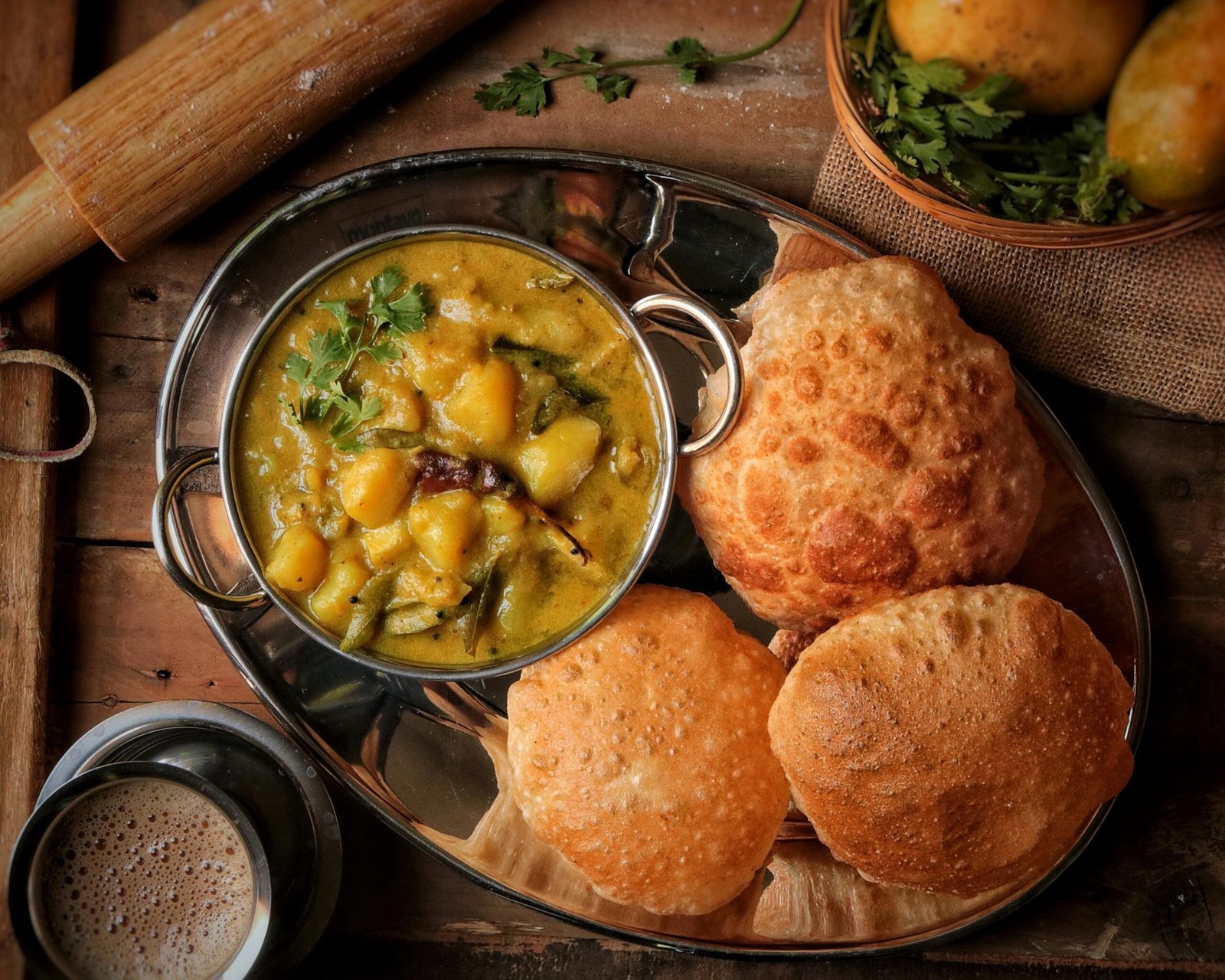
If you are the kind of person who needs a savoury kick to get your brain functioning, the popular Assamese breakfast scene has plenty to offer. Enter the Luchi and Bhaji. Luchi is a deep-fried flatbread made from refined flour, similar to a puri but much lighter and paler in colour. It is usually served with a simple potato curry or a mixed vegetable dish seasoned with ginger and green chillies. In many households, the Bhaji is seasoned with “Panch Phoron,” a five-spice blend that includes fennel, cumin and kalonji, giving the dish a complex and aromatic profile that wakes up the palate.
The secret to a good Luchi is its puffiness. It should arrive on your plate like a small, golden balloon that collapses with a satisfying hiss when you tear into it. It is oily, it is salty and it is absolutely delicious when paired with a cup of strong tea. For many city dwellers in Guwahati, this is the go-to weekend breakfast that signals it is time to relax and stop worrying about the Monday morning commute. While Jolpan is the soul of rural Assam, Luchi and Bhaji are the comfort food of the urban morning, often enjoyed in bustling local cafes where the air is thick with the smell of hot oil and fresh ginger.
The Unspoken Rule of the Tea Cup
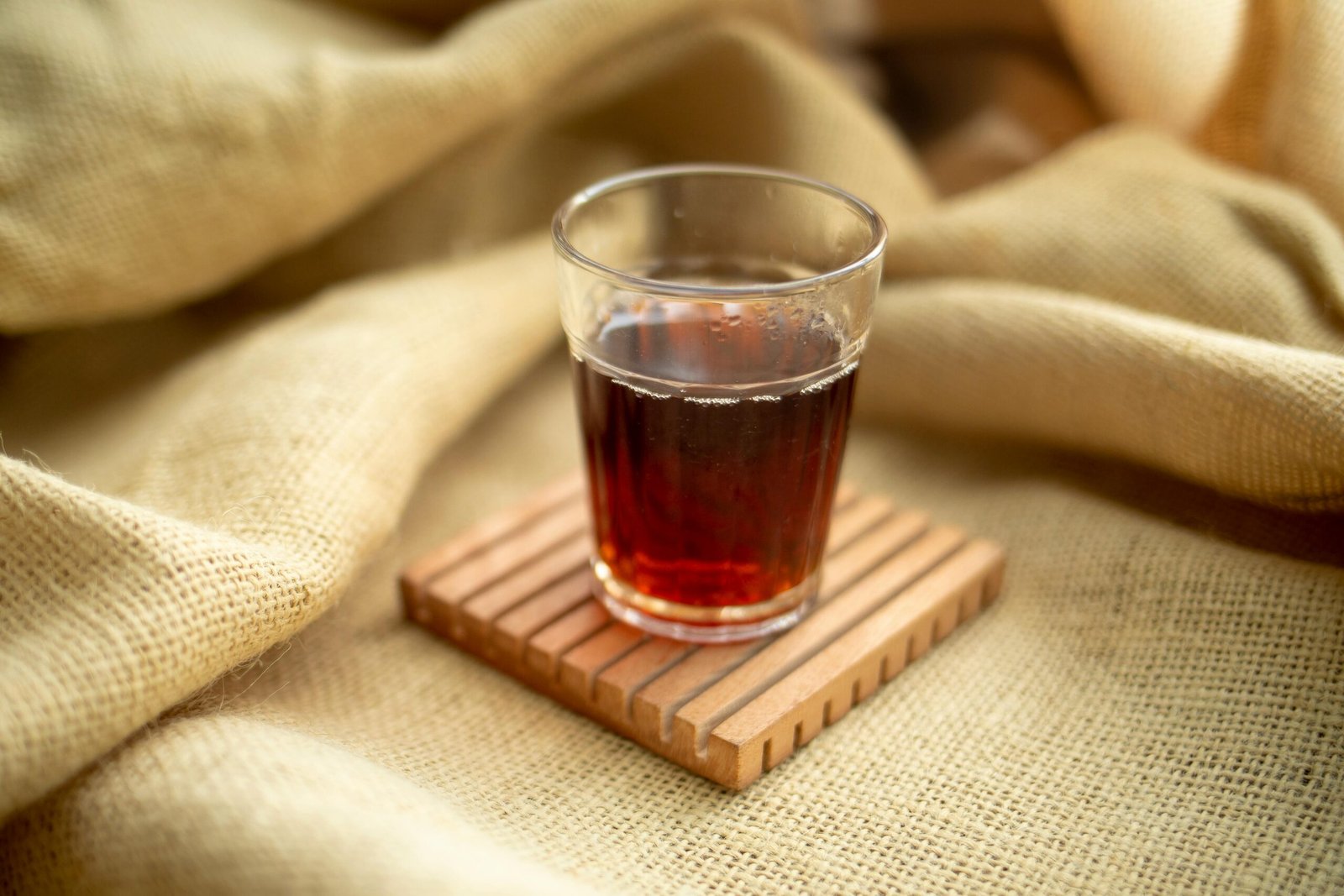
In Assam, tea is not a beverage; it is a way of life. You do not just “have a cup of tea” here. You experience it. Whether you are drinking a strong and malty CTC tea with plenty of milk and sugar or a delicate orthodox leaf tea that tastes like a spring morning, the tea is the thread that stitches the entire breakfast together. It cleanses the palate after the richness of the curd and provides the caffeine kick needed to balance out the “rice coma” that usually follows a heavy Jolpan session. The state produces more tea than almost anywhere else on earth, so it is only natural that the morning brew is treated with such reverence.
There is a certain etiquette to drinking tea in an Assamese household. It is usually served in small brass cups or elegant china and it is always accompanied by something to nibble on. Even if you have just finished a massive plate of Sira and Doi, your host will likely insist that you have “just one more Pitha” with your second cup of tea. Resistance is futile, so you might as well lean into the hospitality. The tea here is robust and full-bodied, often needing just a touch of milk to bring out its natural sweetness. It is the perfect companion to a rainy morning in the valley, where the sound of the rain on the tin roofs provides the perfect soundtrack for a slow breakfast.
Cultural Connection and Community
What makes these dishes so special is the culture of sharing that surrounds them. Breakfast is rarely a solitary affair. It is a time for family members to sit together and discuss the day ahead or for neighbours to drop by for a quick chat and a bowl of Jolpan. There is a great sense of community embedded in these recipes, many of which have been passed down through generations of women who took pride in the specific way they rolled their Pithas or fermented their curd. To eat an Assamese breakfast is to participate in a history that stretches back hundreds of years, connecting the modern diner with the farmers and artisans of the past.
If you are a woman who loves to travel and wants to experience this culture first-hand, you might find that a curated journey is the best way to get behind the scenes. For instance, the Kaziranga and Nagaland tour with Meraki offers an amazing opportunity to sit with local communities and understand the stories behind these flavours. It is one thing to read about Kumol Sawul, but it is quite another to eat it while sitting on a veranda overlooking a tea garden, while the morning mist lifts off the hills.
Tips for the First-Time Breakfast Explorer
If you find yourself in the Northeast and are ready to tackle the local breakfast scene, here are a few things to keep in mind. First, do not be afraid to use your hands. Much of this food is meant to be mixed and felt with your fingers to truly appreciate the textures. Mixing the curd, jaggery, and rice with your hands allows you to control the ratio of sweetness to crunch in every bite. Second, pace yourself. The rice-based dishes are deceptively filling, and it is easy to overeat before the savoury Luchi even arrives on the table.
Finally, keep an open mind about the combinations. The idea of mixing rice, curd and jaggery might sound strange if you grew up eating eggs and paranthas, but there is a reason this tradition has survived for centuries. It is a perfectly balanced meal that covers all the bases of nutrition and satisfaction. By the time you finish your third Til Pitha and your fourth cup of tea, you will likely be wondering why the rest of the world hasn’t caught on to the magic of the Assamese morning. It is a slow, soulful way to start the day that reminds us that some of the best things in life require nothing more than water, rice and a little bit of time.