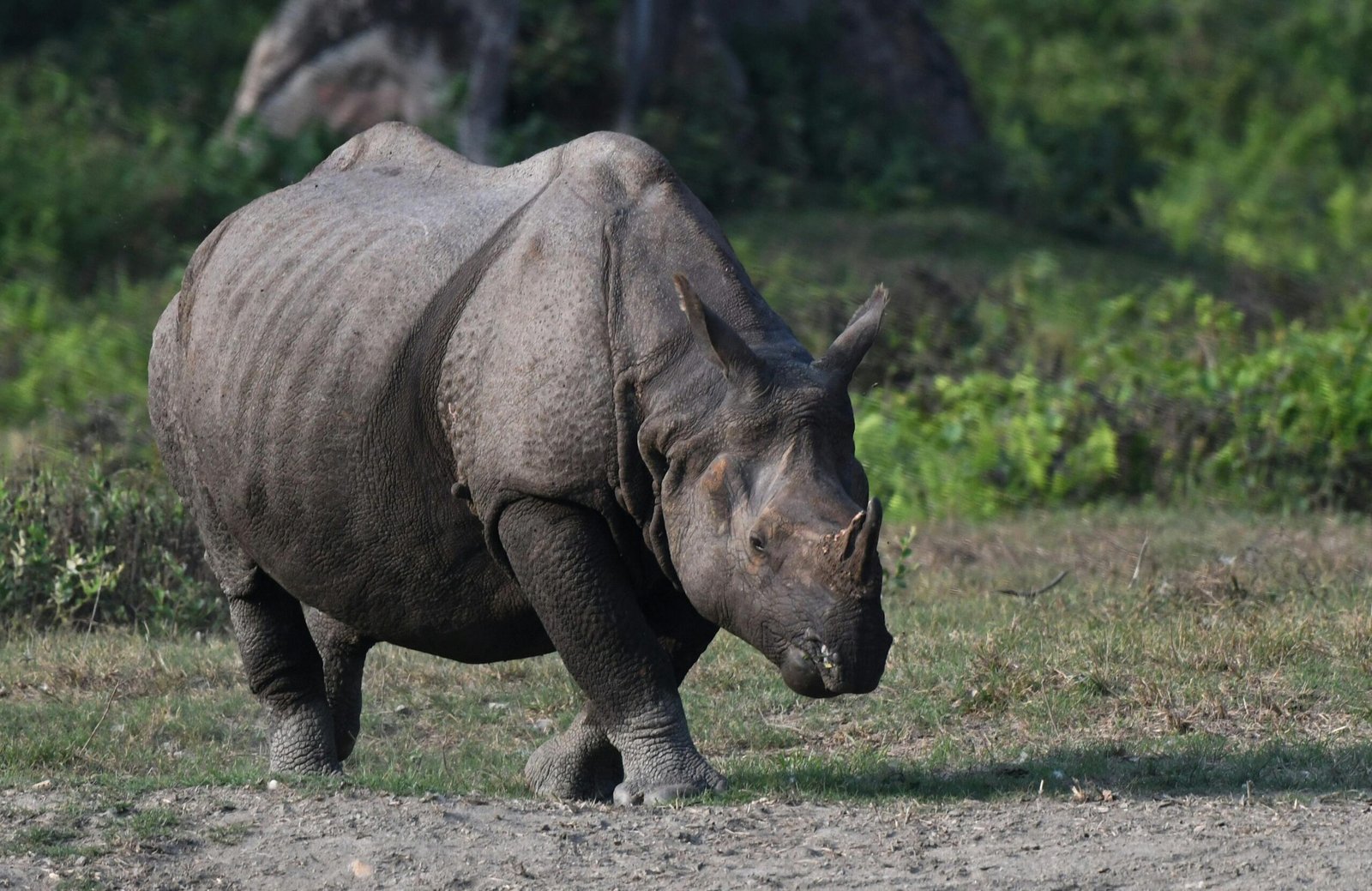
If you were to catch a glimpse of a prehistoric armoured tank wandering through a misty swamp, you might assume you had accidentally stepped into a time machine set for the Mesozoic Era. However, you are simply witnessing the daily commute of the most famous resident of the Brahmaputra valley. The story of Kaziranga rhinos is one of the most improbable and triumphant chapters in the history of global wildlife protection.
It is a tale that began with a shockingly low number of survivors and transformed into a gold standard for how humans can occasionally get things right when it comes to the natural world. While most species of the megafauna variety have spent the last century slowly fading into the background, the one-horned rhino decided to dig its heels into the Assamese mud and stage a spectacular comeback.
A Royal Intervention and the Brink of Extinction
To truly appreciate the current population of the Kaziranga rhinos, we have to go back to the year 1904, when the situation was looking incredibly grim. Lady Mary Curzon, the wife of the then Viceroy of India, visited the region specifically to see the fabled rhinoceros. After days of trekking through the tall elephant grass, she failed to spot a single one. Legend has it that she saw a few footprints but not the animal itself.
Realising that the species was on the absolute verge of vanishing forever, she did what any sensible person in a position of power would do and nagged her husband until he took action. At that time, it was estimated that there were only about twelve individuals left in the entire area.
In 1905, the Kaziranga Proposed Reserve Forest was created, covering an area of approximately 232 square kilometres. This was the humble beginning of what would eventually become a UNESCO World Heritage site and a global sanctuary. The early conservationists faced a monumental task because they were not just fighting against the elements but also against a lack of awareness and a booming demand for land. Over the next century, the park expanded, and the protection levels intensified, turning a tiny patch of swamp into a fortress for biodiversity.
Understanding the Resilience of Kaziranga Rhinos
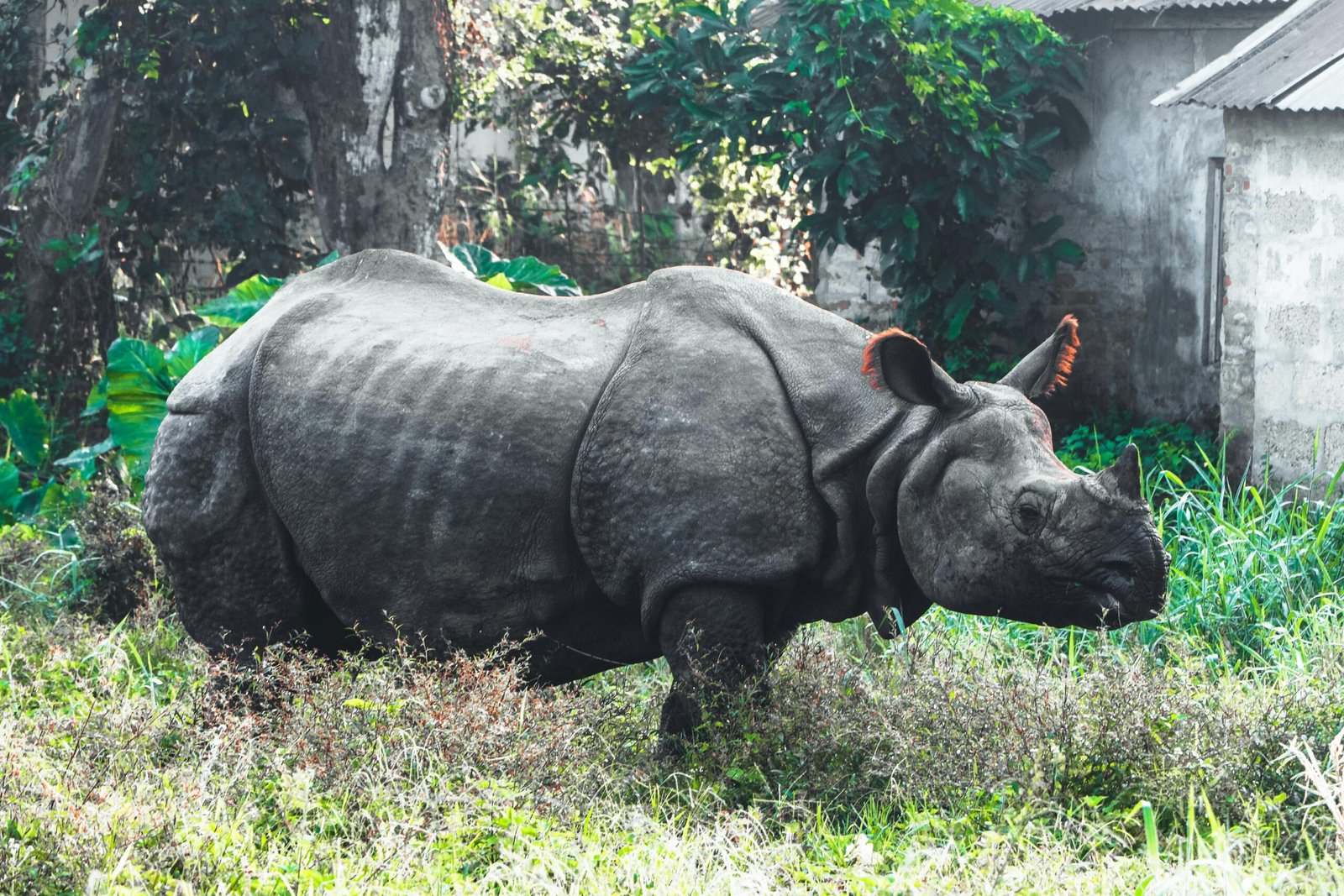
When observers discuss the Kaziranga rhinos, they are describing a creature of tremendous presence that carries the physical weight of evolutionary history in its sturdy frame. The thick and layered skin folds of the animal create a formidable appearance that reflects its resilience through thousands of years of environmental shifts. Underneath that rugged exterior, however, is a surprisingly agile animal that can charge at speeds of up to fifty kilometres per hour. They are also excellent swimmers, which is a vital skill when your primary home is a flood plain that likes to turn into an inland sea every monsoon.
The primary reason for the success of these rhinos is the sheer dedication of the forest guards who live and work inside the park. These men and women operate in some of the most challenging conditions imaginable, facing off against armed poachers, wild elephants, and the relentless heat of the tropics. They live in remote anti-poaching camps for weeks at a time, often with very little contact with the outside world. Their presence is the single greatest deterrent to those who wish to harm the animals for their horns. It is a high-stakes game of hide and seek where the prize is the survival of a prehistoric icon.
How the Brahmaputra Valley Became a Blueprint for Wildlife Conservation in India
The broader context of wildlife conservation in India often highlights Kaziranga as the shining example of what is possible. While many other parks struggle with dwindling numbers and habitat loss, Kaziranga has seen its rhino population grow steadily. From those original twelve individuals in 1905, the population has surged to over 2,600 according to the most recent census. This growth is even more impressive when you consider the geographic challenges of the region. The Brahmaputra River, which provides the life-giving water for the park, is also its greatest threat.
Every year, the monsoon rains cause the river to burst its banks, submerging large portions of the park. While this annual flooding is essential for maintaining the grassland ecosystem, it also forces the animals to migrate to the higher ground of the Karbi Anglong hills. This migration is a dangerous journey that requires the animals to cross busy highways, where they are at risk of being hit by vehicles. The conservation teams work around the clock during these months to manage traffic and ensure the animals can reach safety without being harassed or harmed. It is a massive logistical operation that happens every single year without fail.
The Landscape of Kaziranga National Park Rhinos
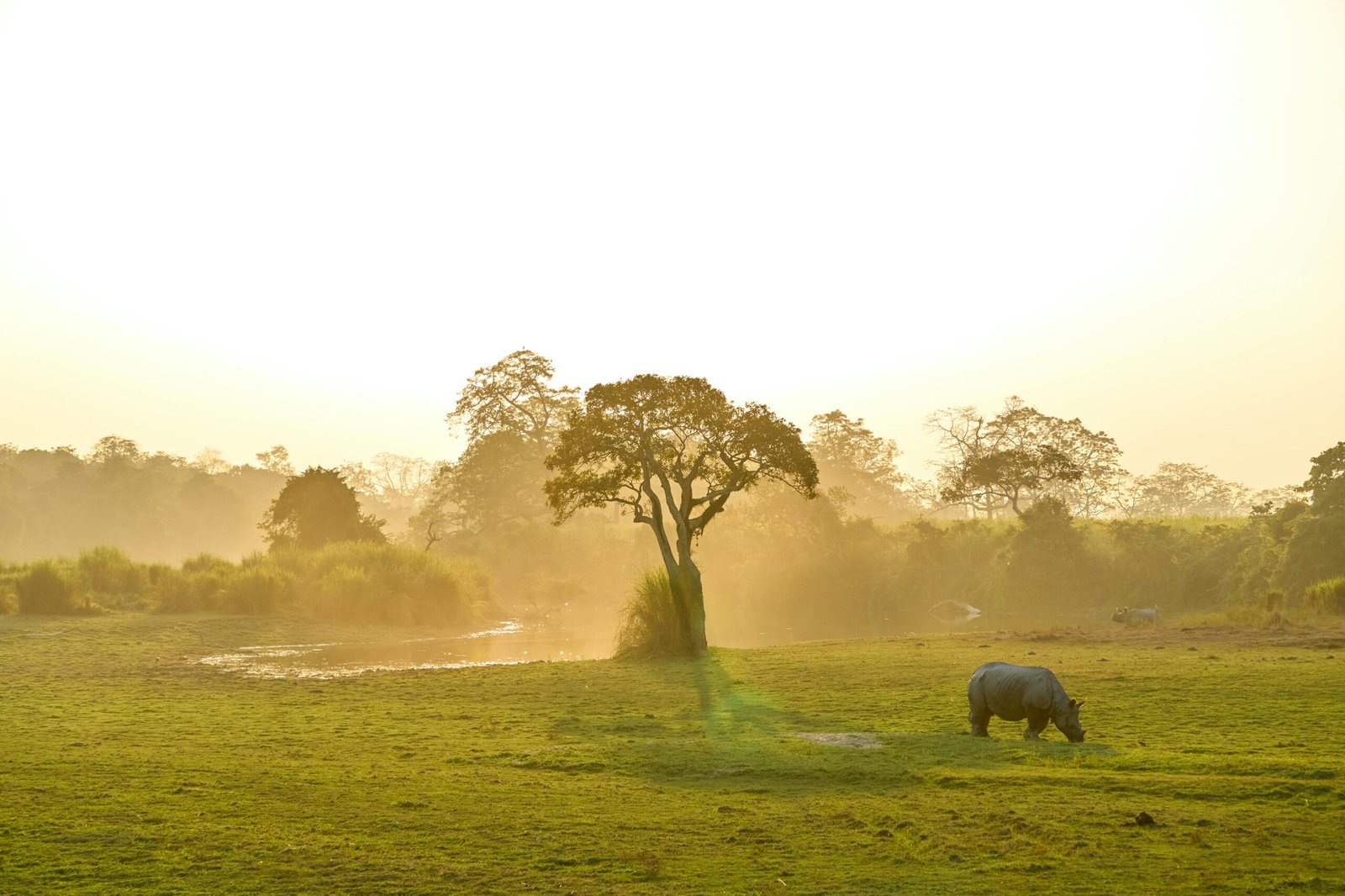
The habitat of the Kaziranga National Park rhinos is a mosaic of tall “elephant” grass, marshland, and dense tropical moist broadleaf forests. It is an incredibly productive landscape that supports one of the highest densities of herbivores in the world. Besides the rhinos, the park is home to wild water buffalo, swamp deer, and a healthy population of tigers.
In fact, Kaziranga has one of the highest densities of tigers in any protected area globally, though they are notoriously difficult to spot in the thick vegetation. The synergy between these species is what makes the ecosystem so robust.
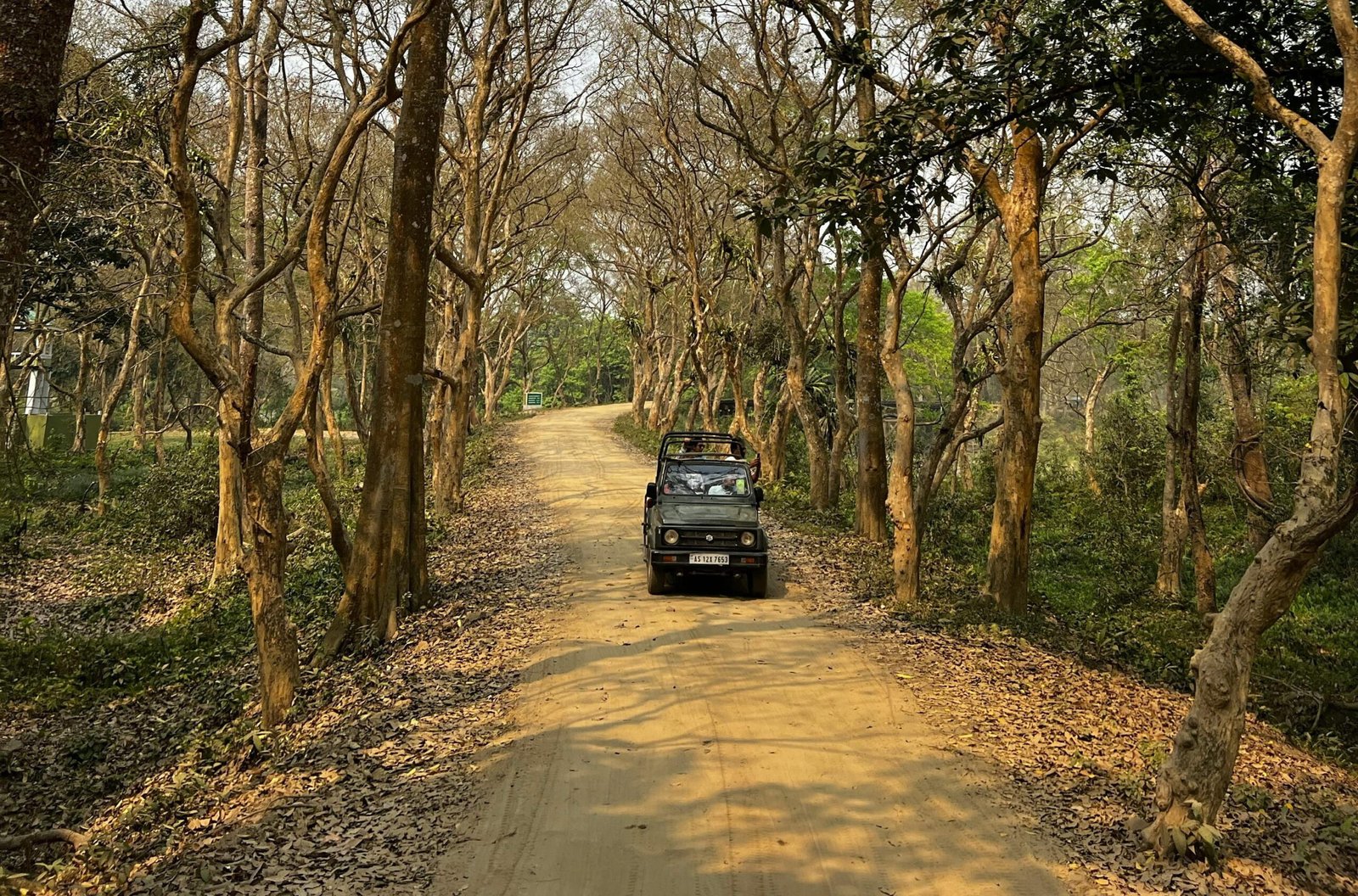
The best way to see them is usually from a jeep during the early morning hours when the mist is still clinging to the grass. There is a subtle majesty in watching a mother and her calf navigate the marshes, completely indifferent to the cameras and the whispers of the tourists.
Travelling with a Purpose and a Soul
Many people come to Assam purely for the wildlife, but they leave with a deep appreciation for the culture and the people who make this conservation possible. For those who want to experience this landscape in a way that is respectful and deeply engrossing, choosing the right way to travel is essential. Our philosophy at Meraki is about putting your soul and your heart into everything you do, and that is exactly how the conservation of these rhinos is managed.
If you are a woman looking for a community of like-minded explorers, you might consider checking out our
Kaziranga & Nagaland Tour for a journey that connects you with both the nature and the culture of the Northeast.
The Ongoing Mission to Protect a Living Legacy
As we look toward the future, the challenges for the rhinoceros remain significant. Climate change is making the annual floods more unpredictable and severe, and the pressure of human population growth continues to squeeze the boundaries of the park. However, the foundation that has been built over the last century is incredibly strong. There are now plans to expand the range of the one-horned rhinos to other parks in Assam, such as Manas and Orang, through a programme known as the Indian Rhino Vision 2020 and beyond. The goal is to ensure that the population is spread across multiple locations to protect against the risk of disease or a single catastrophic event.
The story of how Assam saved the one-horned rhino is a powerful reminder that we are the guardians of the prehistoric world. We inherited a planet filled with wonders, and it is our responsibility to ensure that they are still here for the next generation. The next time you see a picture of a rhino with its skin like folded plates and its solitary horn pointing toward the sky, remember the twelve survivors in 1905. Remember the forest guards in their rain gear and the local villagers who watch over the migration routes. Most of all, remember that success in conservation is not a destination but a continuous journey of care and vigilance.
Your next great story is just a message away. Get in touch with us to find out how you can join our next curated tour and see the world through a different lens.